
Toppers Economics Lab

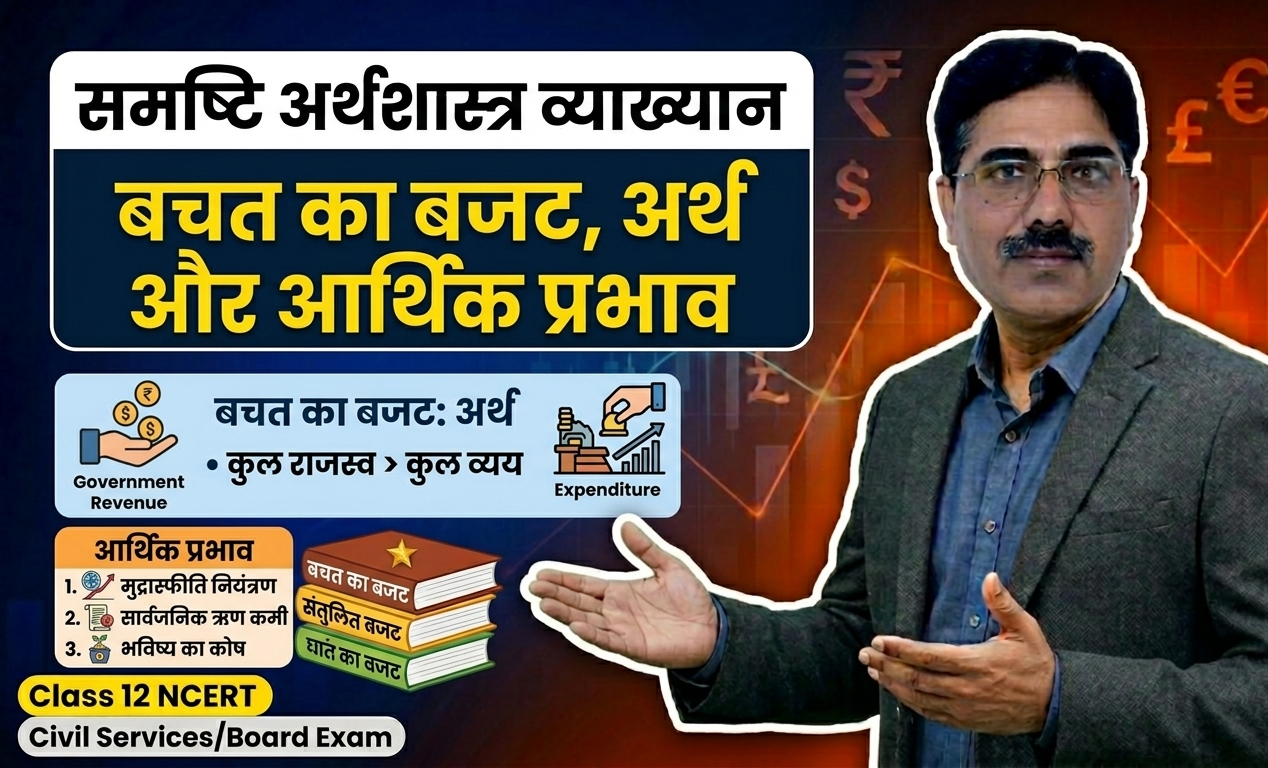
समष्टि अर्थशास्त्र व्याख्यान: बचत का बजट, अर्थ और आर्थिक प्रभाव

# समष्टि अर्थशास्त्र व्याख्यान: बचत का बजट, अर्थ और आर्थिक प्रभाव
यह व्याख्यान कक्षा 12 एनसीईआरटी (NCERT) समष्टि अर्थशास्त्र के अंतर्गत सरकारी बजट के अंतिम प्रकार **बचत का बजट (Surplus Budget)** पर आधारित है। पिछले लेक्चर्स में हमने संतुलित और घाटे के बजट को समझा था, आज हम बचत के बजट की बारीकियों और इसके व्यापक आर्थिक प्रभावों का अध्ययन करेंगे।
## 1. बचत का बजट क्या है?
जब किसी वित्तीय वर्ष में सरकार की कुल अनुमानित प्राप्तियां या आय (Revenue Receipts) उसके कुल प्रस्तावित या अनुमानित व्यय (Expenditure) से अधिक होती हैं, तो उस स्थिति को **बचत का बजट** या आधिक्य का बजट कहा जाता है।
सरल शब्दों में, जब सरकार बाजार और जनता से टैक्स के रूप में पैसा ज्यादा वसूलती है, लेकिन उसे सार्वजनिक कल्याण या विकास कार्यों पर कम खर्च करती है, तो सरकार के पास वित्तीय अधिशेष (Surplus) बच जाता है।
## 2. बचत का बजट कब अपनाया जाता है?
सामान्य परिस्थितियों में या विकासशील देशों में इस प्रकार का बजट नहीं बनाया जाता। इसे विशेष रूप से अर्थव्यवस्था में **अत्यधिक मुद्रास्फीति (Inflation/महंगाई)** और **अति-मांग (Excess Demand)** की स्थिति को नियंत्रित करने के लिए एक संकटकालीन उपाय के रूप में उपयोग किया जाता है।
जब देश में वस्तुओं की कीमतें तेजी से बढ़ रही हों और मांग पूर्ति से बहुत आगे निकल जाए, तब सरकार इस संकुचनकारी राजकोषीय नीति (Contractionary Fiscal Policy) का सहारा लेती है।
## 3. अर्थव्यवस्था पर बचत के बजट का प्रभाव
बचत के बजट को लागू करने से बाजार की कार्यप्रणाली पर निम्नलिखित प्रमुख प्रभाव पड़ते हैं:
### क. क्रय शक्ति और तरलता में कमी
सरकार जब ऊंचे प्रत्यक्ष और परोक्ष कर लागू करती है, तो नागरिकों की प्रयोज्य आय (Disposable Income) घट जाती है। लोगों के हाथ में खर्च करने के लिए नकदी या तरलता कम बचती है, जिससे उनकी क्रय शक्ति कमजोर होती है।
### ख. समग्र मांग (Aggregate Demand) में गिरावट
तरलता कम होने के कारण बाजार में वस्तुओं और टिकाऊ सामानों की निजी मांग तेजी से गिरती है। दूसरी तरफ, सरकार स्वयं भी सार्वजनिक निर्माण कार्यों और योजनाओं पर अपना खर्च कम कर देती है। इन दोनों कारकों के संयुक्त प्रभाव से देश की समग्र मांग (AD) वक्र नीचे की ओर खिसक जाता है।
### ग. मुद्रास्फीति पर नियंत्रण
जब समग्र मांग में गिरावट आती है, तो बाजारों में जमा अतिरिक्त स्टॉक और बढ़ती हुई कीमतें धीरे-धीरे शांत होने लगती हैं। इस प्रकार बचत का बजट देश में महंगाई की रफ्तार को रोकने में सफल सिद्ध होता है।
## 4. आर्थिक चक्र में बजट की भूमिका
सरकारी बजट देश के आर्थिक उतार-चढ़ाव को स्थिर करने का एक सशक्त माध्यम है, जिसे नीचे दिए गए रेखाचित्र के आधार पर आसानी से समझा जा सकता है:
* **आर्थिक संकट या मंदी (Crisis):** जब देश की राष्ट्रीय आय (Y) कम होती है और मंदी का माहौल होता है, तब सरकार नीचे के क्षेत्र (Deficit) में कार्य करती है, जहाँ वह अपनी आय से अधिक खर्च करके मांग को बढ़ाती है।
* **अत्यधिक आर्थिक वृद्धि या मुद्रास्फीति (Economic Growth):** जब अर्थव्यवस्था बहुत तेजी से दौड़ रही होती है और महंगाई बढ़ने लगती है, तब सरकार ऊपर के क्षेत्र (Surplus) में आ जाती है। यहाँ सरकार “बजट सरप्लस लाइन” के अनुसार अधिक टैक्स वसूलकर और खर्चों को नियंत्रित कर बाजार से अतिरिक्त नकदी सोख लेती है।
**निष्कर्ष:** जहाँ एक तरफ घाटे का बजट मंदी से बाहर निकालने में सहायक है, वहीं बचत का बजट तेजी से बढ़ती महंगाई पर लगाम लगाने का काम करता है। एक कुशल सरकार आर्थिक चक्र के अनुसार इन दोनों नीतियों में संतुलन बनाए रखती है।
इसके साथ ही हमारा बजट के प्रकारों का यह अध्याय पूर्ण होता है। यदि आपके मन में बजट घाटे, संतुलित बजट या बचत के बजट को लेकर कोई भी प्रश्न या न्यूमेरिकल से जुड़ी शंका हो, तो नीचे चैट बॉक्स में जरूर लिखें। धन्यवाद!
Understanding Aggregate Demand & Employment | Keynes Employment Theory Class 12 Economics

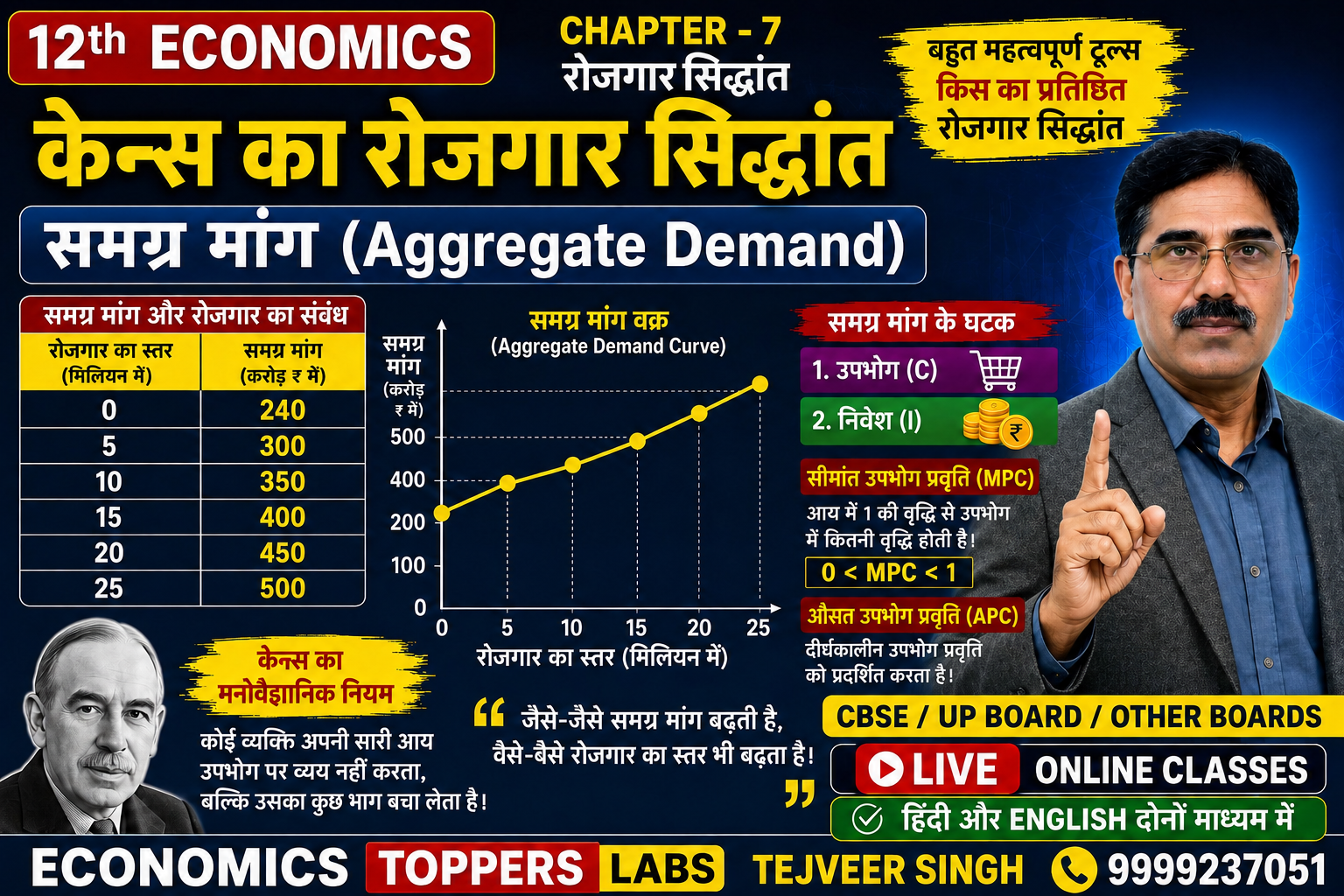
Student, today we will discuss a very important topic of 12th standard, whose employment theory is the prestigious employment theory, then there is a very important tool in King’s employment theory, the tool whose name is Samagra Nirman, today we will discuss a small point, after all, this is Samagraman or Everyday DemandWe will discuss what it is, you already know that macro means macro or the entire economy and when we talk about macro economy and the point of overall value comes in front of us, then it means that what is the total demand in the entire economy i.e. if weTake it in crores and there is a mutual relationship between demand and employment. If I explain to you from the table, brother, how much is the overall demand, how much is the estimated employment, this is the overall demand and the overall demand as well as the level of overall demand and employment, that is, even when the level of employment was zero, there was an estimated demand of Rs 240 crore in our economyIt is possible that the level of employment may be zero but the demand in the economy was at that time, people do not die of hunger and as we are talking about 5 lakh employment, the overall demand became 300 crore, 10 lakh employment became 350 crore, the overall demand became 350 crore in crore rupees and this is 15 million, this is in million lakh or 10 lakh, whether we are talking about this, this is 400 croreIn this way, as the aggregate demand is increasing, our employment level is also continuously increasing, that is, if we look at the aggregate demand, then the aggregate demand curve will appear to us like this where this is the aggregate demand and this is your employment level. Now many students will think that why do this in this way and for what reasonWe will do a deep analysis of this also sometime in the next lecture. You will see that there is a limit consumption function, that is, if you divide the aggregate demand, then it depends on two factors. In the theory of consumption and investment, this is our consumption. Children, understand very carefully and this is our investment. When you think about the consumption functionYou would like to know the meaning of consumption function. Consumption depends on income. Consumption is the function of income. As income increases, consumption will also increase but the tendency of consumption to increase will be less than the tendency of increase in income. This is a psychological law of consumption. If we understand a little more about further consumptionSo you will understand its two types of propensity: Marginal propensity to consume. Average propensity to consume. This is called marginal propensity to consume. This is called average propensity to consume. What is the meaning of average propensity to consume? What is the meaning of marginal propensity to consume? If you understand this a little, then you will understand the slope of this curveYou will understand that marginal propensity to consume tells you how much consumption increases if your income increases by one. If you look at this word technically, generally marginal propensity to consume is less than one and greater than zero. What will be the marginal professor area? It will be less than one andWill be more than zero because of King’s psychological law. What is this psychological law? A person does not spend all his income on consumption, rather he saves some part of it. Saving gives rise to investment, but before understanding this investment, you should know a little more about the average consumption tendencyConsumption propensity tells us what is the mutual relationship between income and consumption, that is, it represents long-term consumption propensity, it represents short-term consumption propensity and if we think about investment, it means that the limit of consumption propensity, if we go deeper into it, MPC is the function of rate of interestAnd income of the marginal propensity to consume will be a function of interest rate and income, whereas the average propensity to consume will depend on the limited income. We gave a small explanation that due to the decreasing trend of aggregate value and marginal propensity to consume, the slope of the average revenue curve becomes like this. Similarly, when you think about investmentIf we discuss completely then we will discuss a little more, students, that’s all today, if you are interested then you can join our online class, you will understand very well, whatever be your CBSE board, we are starting it in English as well as in Hindi, be it your UP Board or any other boardNCERT books are going on in discussion, it is going to be very fruitful for those children, with that today I complete it, we will meet tomorrow with new topic, thank you student.

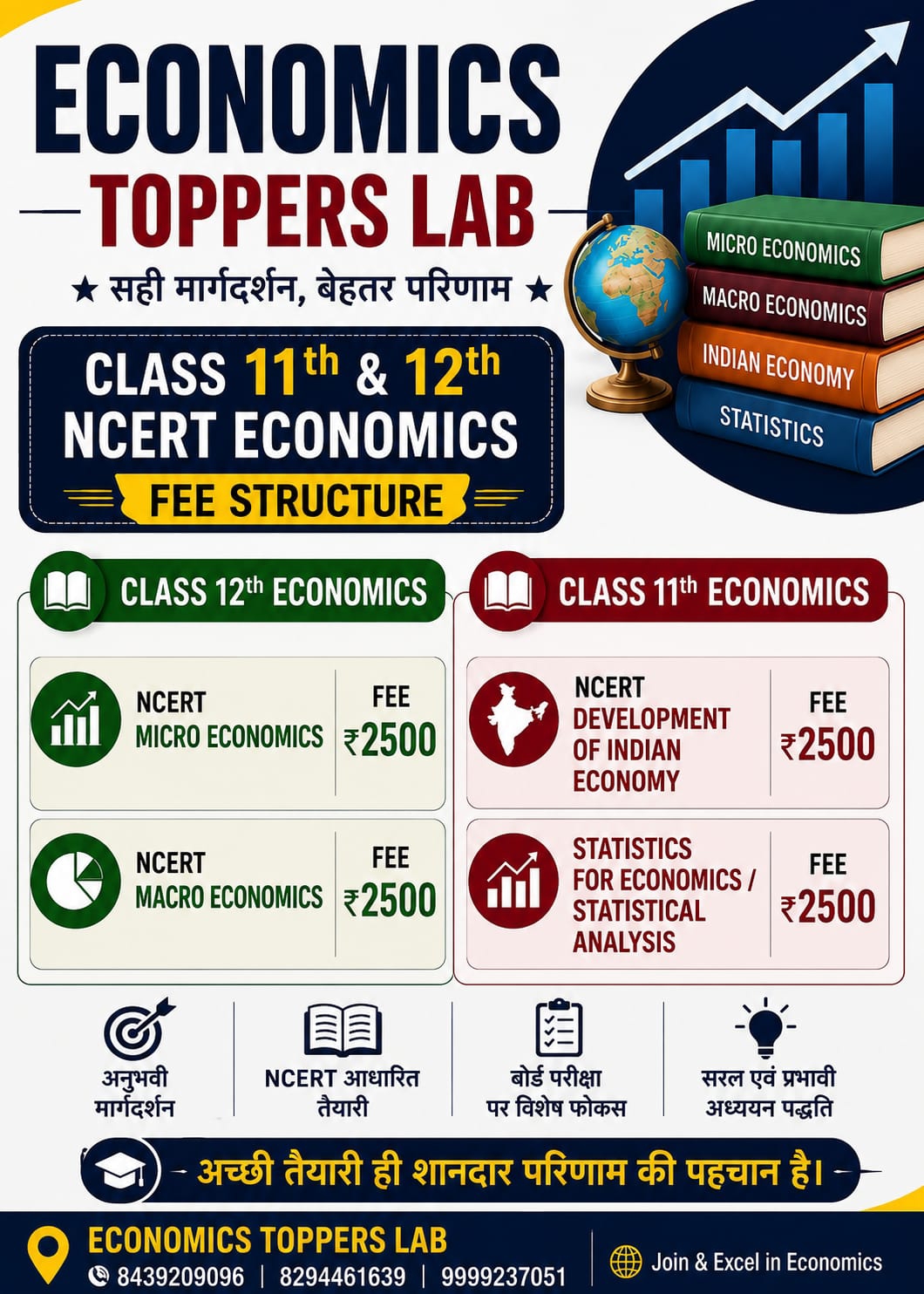
Class 11th & 12th NCERT Economics Fee Structure

🎓ECONOMICS TOPPERS LAB🎓
📚 Class 11th & 12th NCERT Economics Fee Structure 📚

━━━━━━━━━━━━━━
📖 Class 12th Economics

✅ NCERT Micro Economics
💰 Fee: ₹2500

✅ NCERT Macro Economics
💰 Fee: ₹2500

━━━━━━━━━━━━━━
📖 Class 11th Economics

✅ Development of Indian Economy
💰 Fee: ₹2500

✅ Statistics for Economics / Statistical Analysis
💰 Fee: ₹2500

━━━━━━━━━━━━━━

🌟 Experienced Guidance
🌟 NCERT based preparation
🌟 Special focus on board exams
🌟 Simple and effective study method

📍ECONOMICS TOPPERS LAB
“Good preparation is the key to great results.” ▪️

Start Early, Unlock Big Careers: UPSC, IAS & SSC Preparation with Tejveer Singh

Are you dreaming of a career in the civil services? Watch as Senior Faculty Tejveer Singh explains why starting your preparation early is the key to unlocking massive career opportunities in UPSC, IAS, and SSC.

​In this session, we dive into:

  • ​The benefits of early foundation building for competitive exams.
  • ​How to balance Human Intelligence with modern AI tools for smarter study.
  • ​Expert strategies to stay ahead of the competition.

Contact for Enrollment: 99992 37051

Top Choice IAS: Your partner in University Excellence.

Option 2: Focus on Strategy & Tech (Modern Approach)

Title: Human Intelligence vs. AI in UPSC Prep | Master Your Career Strategy with Tejveer Singh

Description: In the age of AI, how do you maintain an edge in the UPSC and SSC exams? Senior Faculty Tejveer Singh breaks down the ultimate strategy for “Starting Early” to secure a high-ranking government position.

​Learn how to leverage your Human Intel alongside cutting-edge technology to crack the toughest exams in India. Whether you are aiming for the IAS or SSC, this roadmap is designed for university excellence.

Key Highlights:

  • ​Start Early Strategy for Students
  • ​UPSC & IAS Coaching Insights
  • ​SSC Exam Roadmap
  • ​Direct Mentorship Contact: 99992 37051

Option 3: Short & Punchy (Social Media/Reels)

Title: How to Unlock a Big Career in UPSC/IAS | Expert Tips by Tejveer Singh

Description: Don’t wait until graduation! Unlock your potential early. Join Senior Faculty Tejveer Singh to learn the secrets of cracking UPSC, IAS, and SSC. Balancing human brainpower with AI is the future of competitive exam prep.

​📞 Call Now: 99992 37051

🎓 Institute: Top Choice IAS – University Excellence

Recommended SEO Keywords to include:

​UPSC Preparation, IAS Coaching, SSC Exam Tips, Tejveer Singh IAS, Career Guidance, Competitive Exams India, Start Early UPSC, Civil Services Foundation.

Economics toppers Lab

toppers economics lab, economics coaching institute India, economics classes for UPSC, economics coaching for IAS preparation, economics optional coaching, best economics institute India, economics classes Delhi NCR, economics coaching Ghaziabad, UPSC economics preparation classes, economics current affairs classes, economics test series UPSC, macroeconomics coaching India, microeconomics classes India, Indian economy coaching for civil services, economics mentoring for competitive exams, economics online classes India, economics classroom coaching, economics preparation institute, toppers economics coaching center, best economics lab for UPSC